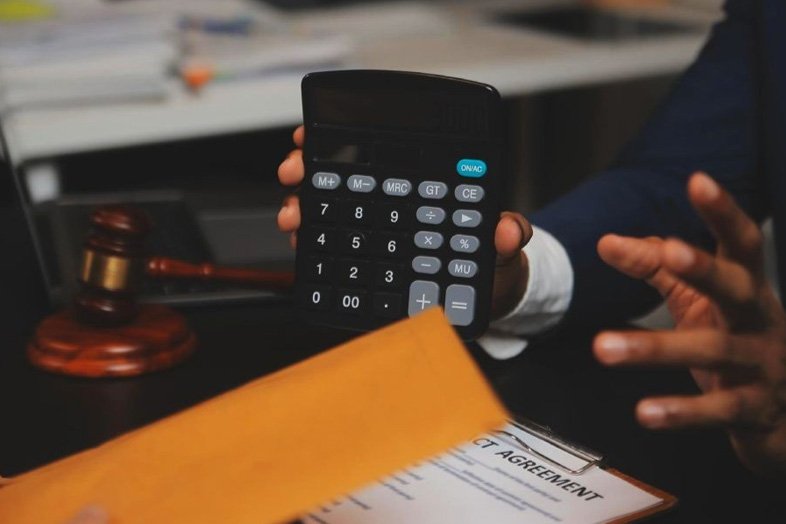
Commercial Dispute/Debt recovery Case
The Client: A mid-sized auto-parts manufacturer in Gurgaon with around 180 employees, supplying components to two major automobile OEMs in India.
What Happened: The manufacturer had supplied auto components worth ₹1.8 crore over six months to a Top class automotive vendor based in Pune. The first three invoices (₹65 lakh) were paid on time. Then payments stopped. The Pune vendor kept placing new orders, promising payment was "in process," and the manufacturer kept supplying. This happens in almost every Indian business — a big client stops paying, but you keep supplying because you're afraid that saying no will cost you the entire relationship.
The manufacturer kept supplying for 5 months, hoping the payments would come. But the vendor didn't pay. Finally, the manufacturer stopped supplying the material — by then, ₹1.8 crore was stuck across 14 unpaid invoices. Now his own business was in trouble — he couldn't pay his raw material suppliers, salaries were getting delayed, and two of his workers had already complained to the Labour Department about late wages.
When we reviewed the paperwork, we found the real problem: there was no formal supply agreement. Everything had been running on purchase orders, email confirmations, and verbal commitments for over three years. No payment terms were defined. No interest on delayed payments. No dispute resolution clause. No jurisdiction clause. The Pune vendor knew that there was no payment realization clause in agreement — and that's exactly why he wasn't paying.
What Made This Case Difficult:
- There was no proper contract — just purchase orders and emails
- The vendor was in Pune, the manufacturer in Gurugram — jurisdiction was not clear
- The vendor's legal team argued that some components had "quality defects" and demanded a ₹40 lakh deduction. This is a most popular tactic when someone doesn't want to pay
- The manufacturer couldn't afford a long court battle — he needed the money within months, not years
- The vendor was a much larger company with deeper pockets and more legal resources
How SPJ Advocates Handled It:
Week 1 — Building the Case from Scrap
- Collected every document from the last three years — purchase orders, delivery receipts, email confirmations, and WhatsApp messages
- Matched every single delivery with its signed “goods receipt note” receipt from the vendor's warehouse. It was a proof that goods worth ₹1.8 crore were delivered and accepted by vendor without any objection
- Reviewed the vendor's "quality defect" claim and found something interesting — vendor had never complained about quality even once during six months of supply. The quality complaint magically appeared only after we sent them the legal notice
Week 2 — Legal Notice
- Sent a strong legal notice under Section 138 for three bounced cheques worth ₹45 lakh, and a separate civil recovery notice to recover the remaining amount
- The notice wasn't a copy-paste internet template. it was a 12-page document that matched every invoice with its delivery proof, receipt signature, and the vendor's own purchase order
- Gave the vendor 15 days to respond, with a clear warning: if you don't pay, we will start criminal proceeding and arbitration at the same time
Week 3–4 — The Vendor Responded with "Quality Problem" Excuse
- The vendor's lawyers replied that ₹40 lakh worth of parts had quality problems and demanded a deduction
- We proved that the claim was false by submitting the quality inspection reports signed by the vendor's own quality team at the time of delivery. Their own signed reports showed zero defects
- We also pointed out something important: if the parts were really defective, why did the vendor keep ordering more? That one fact alone destroyed their claim
Month 2 — Arbitration Filing
- Since there was no written agreement about arbitration clause (how to solve disputes). But the vendor's own purchase orders mentioned their terms and conditions, which included arbitration.
- We filed arbitration at the Delhi International Arbitration Centre.
- At the same time, we filed cheque bounce cases under section 138 in Gurugram court. This put pressure from two sides at once — a criminal case and an arbitration case running together.
Month 3–5 — Negotiation Phase
- The vendor was now facing serious pressure from two side at once — an arbitration case for the pending payment AND criminal cases for the bounced cheques.
- The pressure worked. The vendor's owners themselves called us to talk — not just their lawyers.
- We had the upper hand. Our paperwork was solid, their quality excuse had already declined, and the criminal cases were moving forward.
The Settlement:
- The vendor agreed to pay ₹1.62 crore (90% of the outstanding amount) in three equal instalments over 90 days
- The ₹18 lakh reduction was agreed as a commercial compromise to avoid a 2-year arbitration timeline.
- We withdraw all three cheque bounce cases after receipt of the final instalment
- For future business, both sides signed a proper written agreement with clear rules: payment within 30 days, 18% interest if payment is late, and any dispute to be settled through arbitration in Delhi
What We Did After the Recovery:
- We drafted a detailed supply agreement template for the manufacturer, now he is using it with ALL clients — not just this vendor
- We set up a simple payment tracking system with 15-day and 30-day automatic reminder triggers
- We advised the manufacturer that don't supply more than ₹25 lakh worth of goods to anyone without a signed agreement. He followed this rule, and since then, no client has been able to hold back his payments.
The Result: ₹1.62 crore recovered in 5 months — without a single court hearing. The manufacturer's cash flow was restored, pending salaries were cleared, and the two Labour Department complaints were resolved. The vendor resumed business with new supply agreement and paid on time for every order since. Most importantly, the manufacturer now has a legal framework protecting every business relationship — something that didn't exist before this dispute.